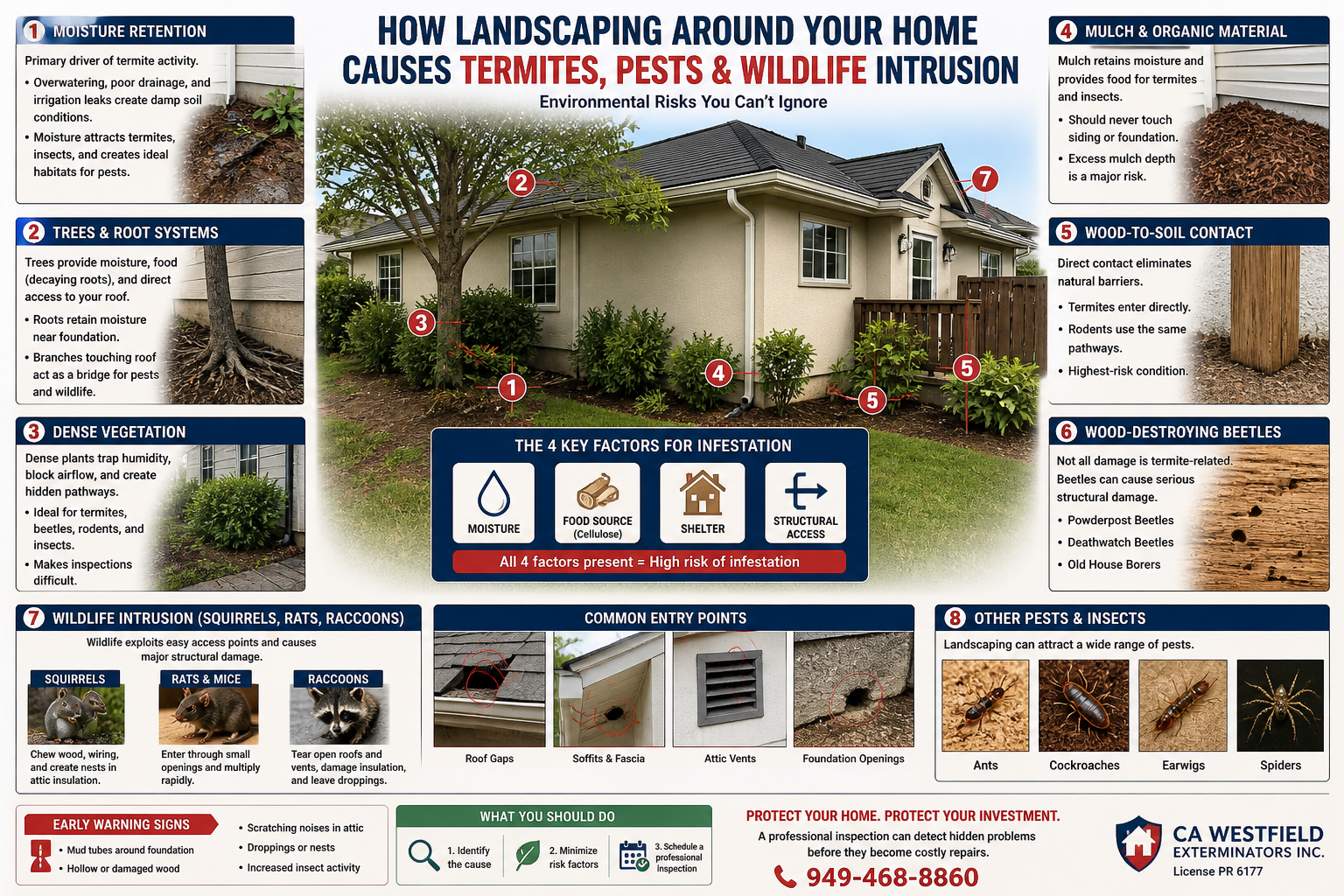
Advanced Environmental & Structural Risk Analysis for California Homes (2026)
📞 Schedule a Certified Termite, Pest & Wildlife Inspection
📞 Call Now: 949-468-8860CA Westfield Exterminators Inc • Structural Pest Control License PR 6177
WDO • HOA • Escrow (Section 1) • Wildlife Entry Inspection
🏡 Executive Overview (Field-Level Perspective)
Landscaping significantly alters the microclimate and ecological balance surrounding a structure.
When trees, plants, mulch, and organic materials are installed without proper spacing and moisture control, they create ideal conditions for:
- Termites (subterranean & drywood)
- Wood-destroying beetles (WDO category)
- Ants and insects
- Rodents (rats, mice)
- Wildlife (squirrels, raccoons)
Core Principle:
Infestation occurs when Moisture + Cellulose + Shelter + Structural Access coexist.
🔬 Integrated Infestation Model
Moisture + Organic Material + Shelter + Structural Access = Active Infestation👉 This model applies to both insects and vertebrate pests
💧 1. Moisture Retention (Primary Driver of Termite Activity)


🔬 Technical Mechanism
Landscaping increases soil moisture through:
- Irrigation overspray
- Poor drainage grading
- Organic mulch retention
- Reduced evaporation due to plant density
👉 Result:
- Elevated humidity zones
- Softened wood fibers
- Ideal habitat for subterranean termites
⚠️ Structural Impact
- Moisture migrates into sill plates and framing
- Termite colonies establish near foundation
- Hidden structural degradation begins
🌳 2. Trees & Structural Bridging (Above & Below Ground)


🔬 Mechanism
Trees create both:
✔ Subsurface Risk
- Moisture-retaining root zones
- Decaying root cellulose
✔ Above-Ground Risk
- Direct structural access via branches
⚠️ Critical Condition
👉 Branches contacting:
- Roofline
- Fascia
- Gutters
👉 Enables:
- Squirrel attic entry
- Raccoon roof access
- Rodent movement into vents
🌿 3. Dense Vegetation & Microclimate Stabilization


🔬 Environmental Effect
Dense vegetation creates:
- Low airflow zones
- Reduced UV exposure
- Stable humidity
👉 Ideal for:
- Termites
- Wood-boring beetles
- Ant colonies
- Rodents
🌱 4. Mulch & Organic Layers (Dual-Risk System)


🔬 Mechanism
Mulch functions as:
- Moisture retention barrier
- Organic habitat layer
👉 Facilitates concealed pest movement and nesting
⚠️ High-Risk Condition
- Mulch in direct contact with siding
- Excessive mulch depth
🪵 5. Wood-to-Soil Contact (Direct Structural Entry)


🔬 Mechanism
This condition removes all protective barriers:
- Direct termite access
- Continuous moisture absorption
- Shared pathway for rodents
👉 Highest-risk condition in structural pest control
🪲 6. Wood-Destructive Beetles (Often Misidentified)


🔬 Key Insight
Not all structural damage is termite-related.
✔ Common Beetle Types
- Powderpost beetles (hardwood damage)
- Deathwatch beetles (moist wood)
- Old house borers (structural framing)
👉 Damage is caused by larvae feeding inside wood
🐿️ 7. Wildlife Intrusion (Squirrels, Rats, Raccoons)


🔬 Entry Mechanism
Wildlife exploits:
- Roof gaps
- Attic vents
- Soffits
- Foundation openings
✔ Common Issues
🐿️ Squirrels
- Chew wood and wiring
- Nest in attic insulation
🐀 Rats & Mice
- Enter through small openings
- Rapid reproduction
🦝 Raccoons
- Tear open roof structures
- Cause severe attic damage
⚠️ Structural Impact
- Insulation destruction
- Fire hazards (chewed wires)
- Structural weakening
📞 Stop Termite, Pest & Wildlife Damage Before It Escalates
📞 Call Now: 949-468-8860🚨 Early Warning Indicators
- Mud tubes near foundation
- Hollow or weakened wood
- Scratching sounds in attic
- Droppings or nesting materials
- Increased insect activity near landscaping
🔬 Professional Inspection Protocol
A certified inspection includes:
- Full structural assessment
- Attic & crawlspace evaluation
- Moisture mapping
- Thermal imaging (FLIR technology)
👉 Detects hidden infestations without invasive damage
📞 Book a Certified Inspection Today
📞 Call Now: 949-468-8860💡 Final Expert Conclusion
Landscaping is not the issue—
👉 uncontrolled environmental conditions are.
🔥 Critical Takeaway
The closer moisture, vegetation, and organic material are to your home,
the higher the probability of termite, pest, and wildlife infestation.