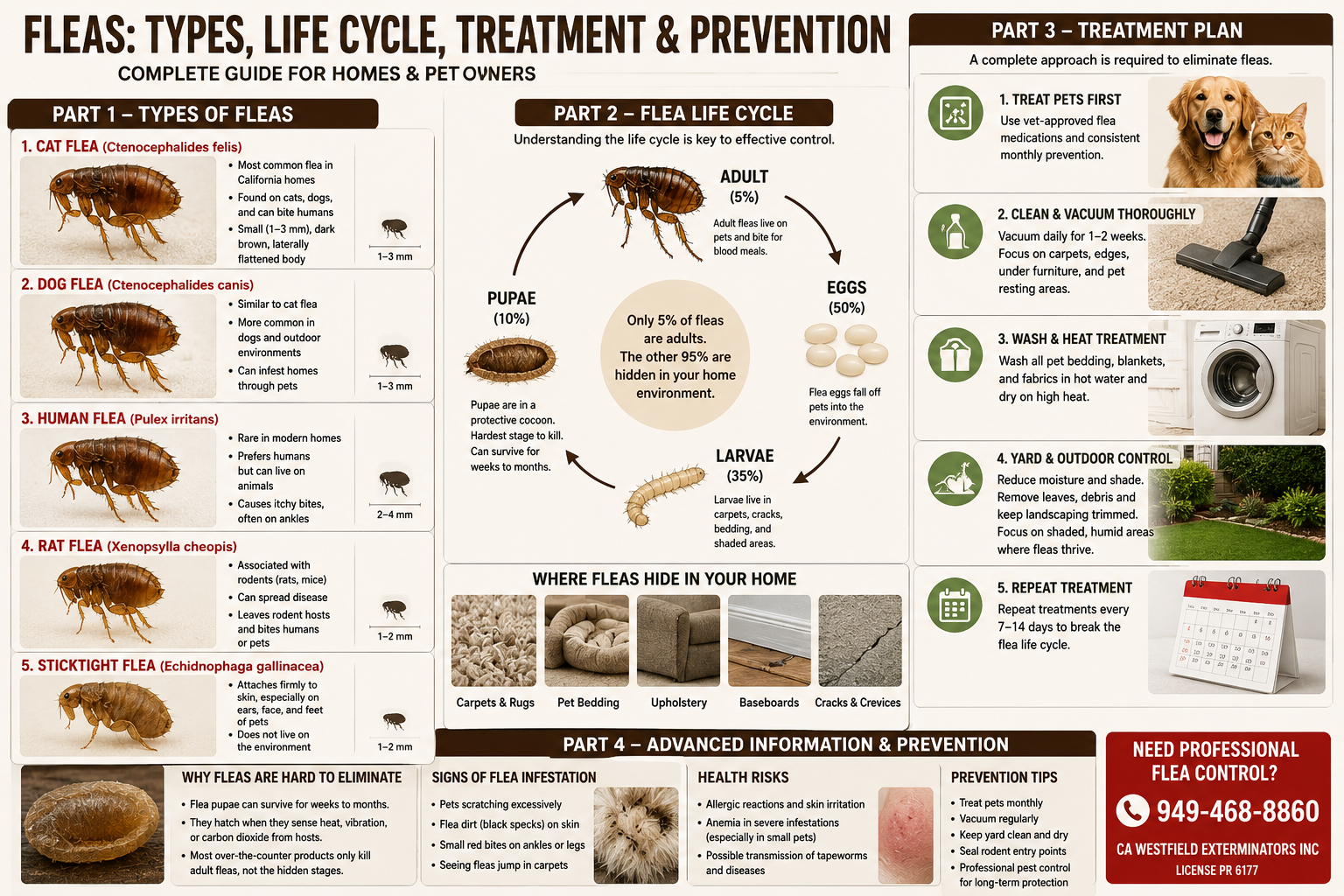
Complete Guide: Types, Causes, Treatment & Advanced Control (2026)
Cat Flea (Ctenocephalides felis) — MOST COMMON


✔ Key Facts
- Responsible for 90%+ of infestations
- Found on:
- Dogs
- Cats
- Humans (indirectly)
✔ Where Found
- Pet fur
- Carpets
- Bedding
- Upholstery
Dog Flea (Ctenocephalides canis)


✔ Less common in California
✔ Similar behavior to cat flea
Human Flea (Pulex irritans)


✔ Rare but possible
✔ Typically found in:
- Unsanitary environments
- Animal-heavy areas
Rat Flea (Xenopsylla cheopis)


⚠️ Important
- Associated with rodents
- Can spread disease
PART 2 — HOW FLEAS START & HOW TO TREAT (ENHANCED)
🔬 Flea Life Cycle (Critical to Understand)


✔ The 4 Stages
- Eggs (fall off pets into environment)
- Larvae (live in carpets, cracks, soil)
- Pupae (protected cocoon stage — hardest to eliminate)
- Adult fleas (visible, biting stage)
👉 Key Fact:
Only about 5% are visible fleas
👉 95% are hidden in your home (eggs + larvae + pupae)
🚨 WHY FLEAS KEEP INFESTING HOMES
1. Pets (Primary Source)
- Dogs and cats bring fleas indoors
- Fleas reproduce rapidly once inside
2. Rodents (Major Hidden Cause)
- Rats and mice carry fleas into:
- Attics
- Crawlspaces
- Wall voids
3. Yard Conditions
- Shaded soil
- Organic debris
- Moist areas
4. Indoor Conditions
- Carpets
- Upholstery
- Pet bedding
🛠️ COMPLETE FLEA TREATMENT PROCESS (PRO LEVEL)
✔ STEP 1 — Treat Pets FIRST (Non-Negotiable)
- Use vet-approved flea medication
- Bath + flea comb removal
- Continue monthly prevention
✔ STEP 2 — Aggressive Vacuuming Protocol
👉 This step is more important than most people realize
✔ How to do it properly:
- Vacuum daily for 7–14 days
- Focus on:
- Carpet edges
- Baseboards
- Under furniture
- Pet sleeping areas
🔥 Why this works:
- Removes eggs
- Forces pupae to hatch (critical for control)
✔ STEP 3 — Wash & Heat Treatment
- Wash all bedding in hot water
- Dry on high heat (kills eggs + larvae)
✔ Must include:
- Pet beds
- Blankets
- Rugs (if washable)
✔ STEP 4 — Yard & Exterior Habitat Control


✔ What to Focus On (NO CHEMICAL VISUALS)
1. Reduce Shade & Moisture
- Trim bushes
- Allow sunlight to reach soil
- Improve airflow
2. Remove Organic Debris
- Leaves
- Grass buildup
- Wood debris
3. Control Soil Conditions
- Keep soil dry
- Avoid overwatering
4. Manage Landscaping Design
- Reduce dense ground cover
- Keep plants away from foundation
👉 Important Insight:
Fleas thrive in cool, shaded, humid soil
👉 Changing the environment = long-term control
✔ STEP 5 — Break the Life Cycle (MOST IMPORTANT)
🔁 Treatment Timeline
- Day 1 → Initial treatment
- Day 7–10 → Re-treatment
- Day 14–21 → Final control
👉 Because:
Pupae can survive weeks or months
🧠 ADVANCED FLEA CONTROL INSIGHT (NEW EXPANSION)
🔬 Why Fleas Are Hard to Eliminate
✔ Pupae Stage (Biggest Problem)
- Protected cocoon
- Resistant to chemicals
- Can stay dormant for weeks
✔ Trigger for Hatching
- Heat
- Vibration
- Movement (walking, vacuuming)
👉 That’s why:
Fleas suddenly “reappear” after treatment
🧬 Indoor Infestation Pattern
Fleas concentrate in:
- Carpet edges
- Under furniture
- Pet resting zones
- Dark, low-traffic areas
🧠 Professional Insight
Fleas are NOT just on pets
👉 They are an environmental infestation
🏡 LONG-TERM PREVENTION STRATEGY
✔ Indoor
- Weekly vacuuming
- Pet treatment maintenance
- Clean sleeping areas
✔ Outdoor
- Trim landscaping
- Remove debris
- Improve drainage
✔ Structural
- Seal rodent entry points
- Reduce crawlspace humidity
📞 Need Professional Flea Control?
💡 FINAL EXPERT TAKEAWAY
👉 Fleas survive because:
- They hide in the environment
- Most are invisible
- They reproduce in cycles
🔥 FINAL TRUTH
If fleas keep coming back
👉 the problem is:
life cycle + environment (not just pets)