Complete Expert Guide: Types, Causes, Bite Symptoms & Safe Removal (2026)
EXECUTIVE OVERVIEW
Ticks are blood-feeding parasites that attach to humans, pets, and wildlife.
Unlike fleas:
- Ticks remain attached for hours to days
- They can transmit serious diseases
🔥 Critical Insight:
Ticks are not random
👉 They are caused by wildlife + environment + yard conditions
🕷️ PART 1 — TYPES OF TICKS IN CALIFORNIA
🕷️ Western Blacklegged Tick
(Primary Lyme Disease Vector)


✔ Identification
- Small size (nymphs ~ poppy seed size)
- Dark legs (“blacklegged”)
- Flattened oval body
✔ Habitat
- Coastal California
- Wooded areas
- Shaded residential yards
⚠️ Risk Level
👉 VERY HIGH (Lyme disease transmission)
🕷️ American Dog Tick


✔ Identification
- Larger size
- Ornate white/silver markings
✔ Habitat
- Grasslands
- Yards
- Trails
⚠️ Risk Level
👉 HIGH (disease transmission possible)
🕷️ Brown Dog Tick
(Indoor Infestation Species)


✔ Unique Feature
👉 Can complete life cycle indoors
✔ Habitat
- Walls
- Baseboards
- Kennels
- Pet sleeping areas
⚠️ Risk Level
👉 VERY HIGH (hard to eliminate)
🕷️ Pacific Coast Tick


✔ Habitat
- Brush
- Shrubs
- Open land
⚠️ Risk Level
👉 MEDIUM–HIGH
🕷️ PART 2 — HOW TICKS INFEST PROPERTIES (ROOT CAUSE ANALYSIS)
🔬 Tick Entry Mechanism


✔ “Questing” Behavior
Ticks do NOT:
- Jump
- Fly
👉 They:
- Climb vegetation
- Extend front legs
- Attach when host brushes past
✔ Primary Sources of Infestation
1. Wildlife (Major Driver)
- Raccoons
- Opossums
- Rodents
- Deer
👉 Carry ticks into yards
2. Pets
- Dogs bring ticks indoors
- Transport ticks into bedding and furniture
3. Landscaping Conditions
- Dense vegetation
- Shaded areas
- Moist soil
4. Structural Factors
- Fence gaps
- Rodent entry points
- Unsealed crawlspaces
🔥 Core Infestation Model
Wildlife + Yard Conditions + Access = Tick Infestation🕷️ PART 3 — TICK BITE SYMPTOMS (DETAILED MEDICAL ANALYSIS)
🚨 Immediate Reaction (0–24 Hours)


✔ Local Symptoms
- Small red bump
- Mild swelling
- Itching
- Warmth at bite site
👉 Often mistaken for:
- Mosquito bite
- Rash
⚠️ Early Disease Indicators (1–7 Days)
✔ Common Symptoms
- Fatigue
- Headache
- Muscle aches
- Fever
✔ Skin Reactions
- Expanding redness
- Possible bullseye rash (Lyme indicator)
🚨 Advanced Symptoms (Days to Weeks)
✔ Neurological Symptoms
- Numbness
- Tingling
- Facial paralysis (rare but serious)
✔ Systemic Effects
- Joint pain
- Severe fatigue
- Cognitive difficulty
🚨 High-Risk Conditions
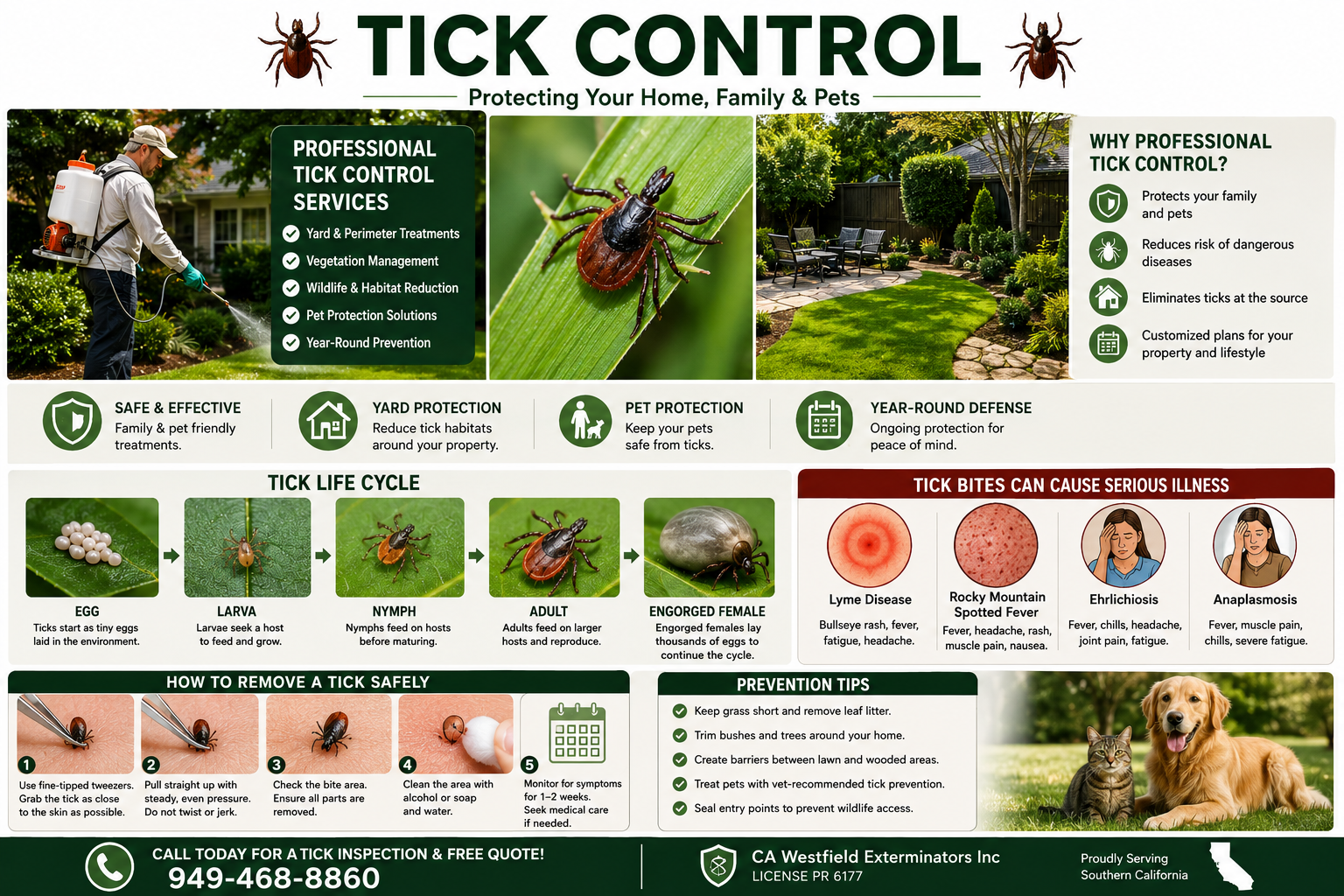
Lyme Disease
- Caused by bacteria transmitted by ticks
- Requires early treatment
Rocky Mountain Spotted Fever
- Fever
- Rash
- Potentially severe
🔥 CRITICAL MEDICAL INSIGHT
Disease transmission risk increases after 24–48 hours of attachment
👉 Early removal is critical
🕷️ PART 4 — SAFE TICK REMOVAL & CONTROL
🛠️ HOW TO REMOVE A TICK SAFELY


✔ Step-by-Step
- Use fine-tip tweezers
- Grab close to skin
- Pull straight upward slowly
- Clean area with alcohol or soap
❌ DO NOT
- Burn tick
- Use oil or chemicals
- Twist aggressively
- Crush tick
✔ After Removal
- Monitor for 1–2 weeks
- Watch for:
- Fever
- Rash
- Fatigue
🕷️ PART 5 — PROFESSIONAL TICK CONTROL & PREVENTION
🛠️ Immediate Response (If Tick Found)
✔ Proper Removal
- Use fine-tip tweezers
- Pull straight upward
- Do NOT twist
❌ Do NOT
- Burn tick
- Apply chemicals
- Crush it into skin
🏡 Professional Control Strategy
✔ 1. Habitat Modification


7
- Reduce shade
- Trim vegetation
- Increase sunlight
✔ 2. Wildlife Control
- Remove attractants
- Seal entry points
- Eliminate nesting zones
✔ 3. Pet Protection
- Monthly tick prevention
- Routine inspection
✔ 4. Structural Control
- Seal foundation gaps
- Maintain barriers
🧠 FINAL EXPERT CONCLUSION
👉 Tick infestations are driven by:
- Wildlife
- Yard conditions
- Environmental balance
🔥 FINAL TAKEAWAY
If ticks are present,
👉 the real issue is:
wildlife + habitat + environment