Many homeowners believe that a newly built home is safe from termites.
Unfortunately, that’s not always true.
Even brand-new houses in California can develop termite problems—sometimes within the first year.
🏗️ Why New Homes Are Not Termite-Proof


New homes are built with fresh wood, which can actually attract termites.
👉 Termites don’t care how old your home is—they care about wood and moisture.
🌦️ Does Construction Timing Affect Termite Risk?
Yes—when your home’s wood framing is built can impact termite risk.
Termites are highly active in certain seasons, especially in California’s warm climate.
🔥 When Termite Activity Is Highest


In Southern California:
- Spring (March-May) → Peak swarming season
- Summer → High feeding activity
- Fall/Winter (Sep – Nov ) → Swarming season
👉 If framing happens during peak season, risk increases.
🏗️ Why Timing Matters During Framing
When a house is being built:
- Wood is fully exposed
- No walls or barriers yet
- Soil treatment may not be complete
👉 This makes it easier for termites to access the structure.
🔍 Why Post-Framing Treatment Can Be More Effective


After framing is completed:
- The full structure is visible
- All wood surfaces are accessible
- Treatment can be applied more precisely
👉 This allows for more complete coverage
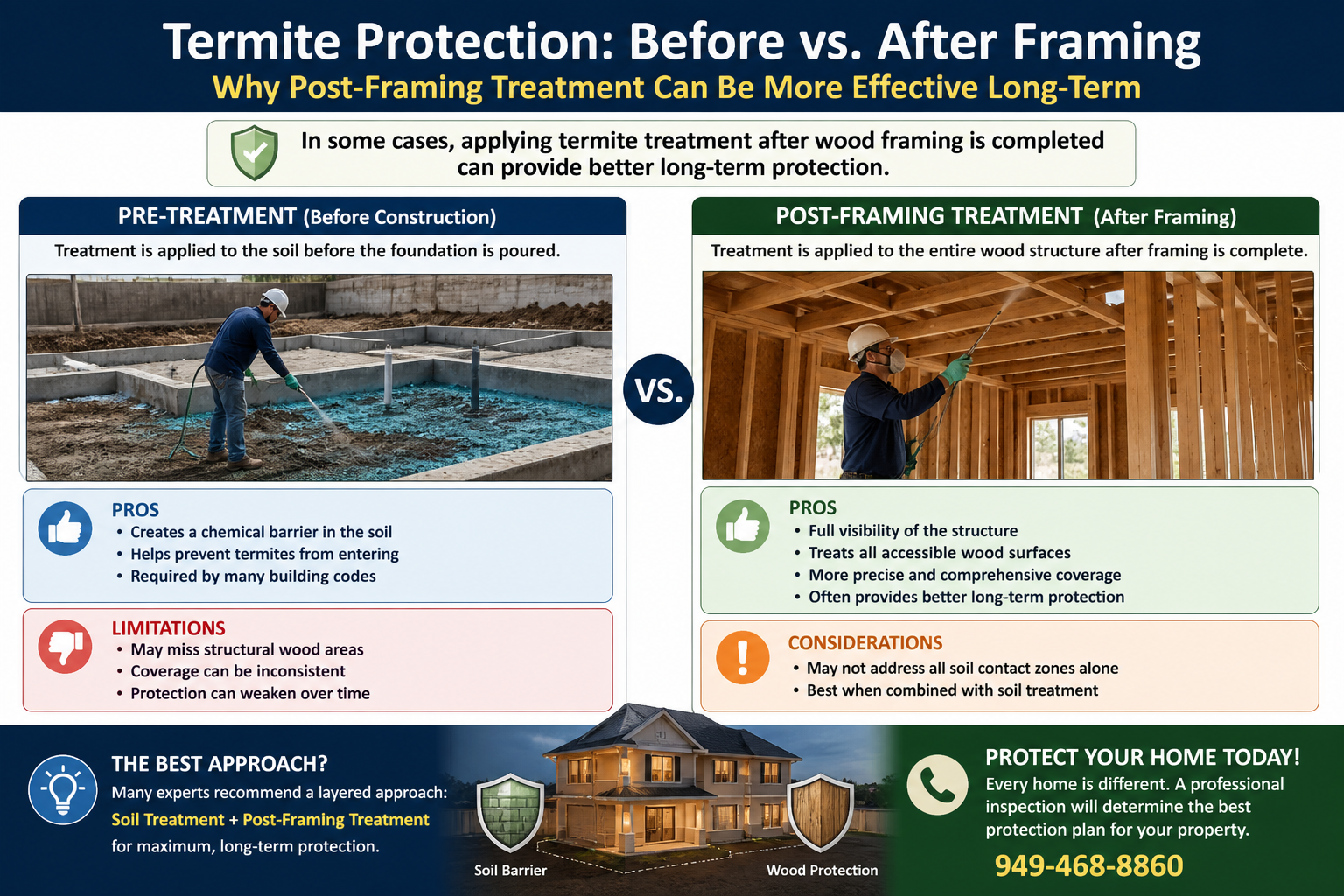
⚖️ Pre-Treatment vs Post-Framing Treatment
Pre-Treatment (Before Construction):
- Focuses mainly on soil
- May miss certain structural areas
- Protection can weaken over time
Post-Framing Treatment:
- Targets actual wood structure
- Better visibility for application
- More precise and targeted protection
👉 Combining both methods often provides the best results
⚠️ Important Note
Post-framing treatment is not always a replacement—it depends on:
- Soil condition
- Construction quality
- Termite risk level
- Environmental factors
👉 A professional evaluation is necessary.
💡 Expert Insight
Many experienced termite professionals recommend:
👉 Layered protection (soil + structural treatment)
👉 Rather than relying on a single method
⚠️ Higher Risk Scenarios
Your home may have higher termite risk if:
- Framing was done during spring swarm season
- Wood sat exposed for long periods
- Construction delays left materials unprotected
- Moisture was present during framing
👉 These conditions attract termites early.
💡 Real-World Insight
Even new homes can develop termite issues if:
- Termites were active during construction
- Wood was exposed at the wrong time
- Preventive treatment was incomplete
👉 Timing + environment = termite risk
🛡️ How to Reduce Risk
- Ensure proper soil treatment before framing
- Avoid long exposure of raw wood
- Keep construction area dry
- Schedule post-construction inspection
👉 Prevention during construction is critical.
🔗 Learn More About Termite Warning Signs
👉 Learn the most common termite warning signs in Southern California homes →
📞 Protect Your Home Early
If your home was built recently, don’t assume it’s termite-free.
📞 Call 949-468-8860 today to schedule a professional inspection.