Fumigation , Preparation, Timeline & What Homeowners Must Know (2026)
📞 Schedule a Professional Termite Inspection
CA Westfield Exterminators Inc • License PR 6177
Drywood Termite • Structural Treatment Specialists
🧠 OVERVIEW
When termites are found in a home, there are two primary treatment options:
🪵 1. Fumigation (Whole Structure Treatment)
🪵 2. Local / Spot Treatment
🔥 Critical Insight:
Choosing the wrong treatment can result in:
- Recurring infestation
- Structural damage
- Additional cost
🪵 PART 1 — FUMIGATION (TENT TREATMENT)


✔ What It Is
- Entire home is covered with a tent
- Gas (fumigant) is released
- Gas penetrates ALL wood structures
🛠️ FUMIGATION PROCESS (STEP-BY-STEP)
✔ Day 1 — Preparation & Tent Setup
- Structure sealed with tent
- Gas released
✔ Day 2 — Active Fumigation
- Gas penetrates structure
- Kills termites in all locations
✔ Day 3 — Aeration & Clearance
- Gas removed
- Safety testing performed
⏱️ Total Time Required
👉 2 to 3 days
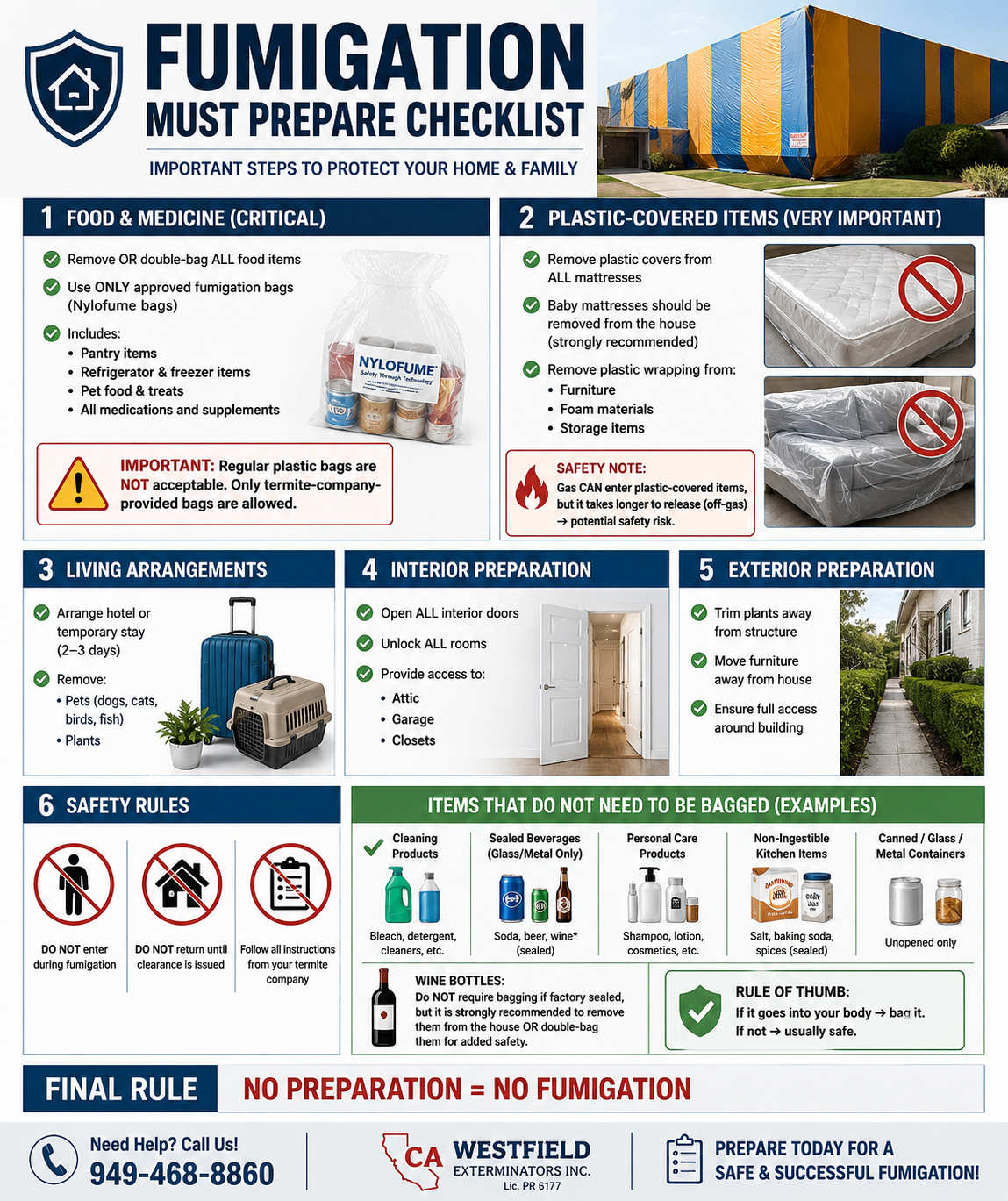
🧳 WHAT YOU MUST PREPARE (VERY IMPORTANT)
✔ 1. Food & Medicine
- Remove OR double-bag ALL food
- Includes:
- Pantry items
- Refrigerator items
- Pet food
- Medicine
✔ 2. Living Arrangements
- Vacate the home
- Arrange hotel or temporary stay
- Remove:
- Pets
- Plants
✔ 3. Interior Preparation
- Open all doors
- Unlock rooms
- Provide attic access
✔ 4. Exterior Preparation
- Trim plants around house
- Move items away from structure
🚨 IMPORTANT NOTES
- You CANNOT stay inside
- You CANNOT return early
- Must wait for official clearance
🧠 WHEN FUMIGATION IS REQUIRED
👉 Recommended when:
- Infestation is widespread
- Multiple colonies present
- Termites are in inaccessible areas
WHAT YOU MUST PREPARE (VERY IMPORTANT)
Food, Medicine & Consumable Safety Requirements
✔ 1. Food & Medicine Handling (CRITICAL STEP)


🚨 ALL consumables MUST be removed or properly sealed
Before fumigation, you are required to:
👉 Remove OR double-bag ALL ingestible items
🚨🔥 CRITICAL REQUIREMENT (VERY IMPORTANT)
⚠️ ONLY use the OFFICIAL fumigation bags provided by your termite company
❗ You MUST use:
👉 Professional-grade fumigation bags (Nylofume bags)
👉 Provided by your licensed termite company
❌ DO NOT USE:
- Regular trash bags
- Grocery bags
- Ziplock bags
- Store-bought plastic bags
🔥 IMPORTANT WARNING:
Using non-approved bags can result in:
- Unsafe contamination
- Failed inspection
- Delay of fumigation
- Liability issues
✔ Includes the Following Items
🍽️ Food Items
- Pantry items (rice, cereal, snacks, dry goods)
- Refrigerator contents
- Freezer items
- Open AND sealed food packages
🐶 Pet-Related Items
- Pet food
- Pet treats
- Food containers and bowls (recommended to remove)
💊 Medical & Health Products
- Prescription medication
- Vitamins and supplements
- Herbal products
APPROVED DOUBLE-BAGGING METHOD
✔ Proper Procedure (REQUIRED)
- Place items inside first Nylofume bag
- Seal tightly (twist + fold method)
- Place into second Nylofume bag
- Seal again completely
🔥 Critical Rule:
Both inner AND outer bags must be approved fumigation bags
⚠️ Common Mistakes to Avoid
🚫 Using regular plastic bags
🚫 Mixing approved bags with non-approved bags
🚫 Leaving food in original packaging
🚫 Forgetting refrigerator/freezer items
🚫 Leaving medicine unprotected
🧠 PROFESSIONAL INSIGHT
👉 Fumigation gas:
- Is colorless and odorless
- Penetrates through microscopic openings
- Can pass through improper packaging
🔥 Expert-Level Insight:
Only Nylofume bags are engineered to block fumigant gas penetration
✔ QUICK HOMEOWNER CHECKLIST
✔ Only termite-company-provided bags used
✔ All food double-bagged correctly
✔ Medicine removed or sealed
✔ Pet food removed
✔ No exposed consumables
🚨 WHY THIS STEP IS NON-NEGOTIABLE
👉 This is:
- A state-regulated safety requirement
- A fumigation approval condition
- A health protection measure
🔥 FINAL TAKEAWAY
No approved bag = No fumigationITEMS THAT DO NOT NEED TO BE BAGGED
(Fumigation Safe Items – No Double Bag Required)
🧠 Overview
During fumigation, NOT all items need to be removed or bagged.
👉 The rule is simple:
🔥 Only ingestible items must be removed or double-bagged
✔ SAFE ITEMS (NO BAGGING REQUIRED)
🧼 Cleaning & Household Products


✔ Examples:
- Bleach
- Laundry detergent
- Dish soap
- Surface cleaners
- Disinfectants
🥤 Beverages (Sealed Glass / Metal Only)
✔ Safe:
- Soda (sealed cans or glass bottles)
- Beer (unopened bottles/cans)
- Wine (sealed bottles)
- 👉 Wine bottles:
- ❌ No bagging required
- ✅ But removal OR double-bagging is strongly recommended
⚠️ Note:
👉 Must be:
- Factory sealed
- NOT opened
- NOT plastic if questionable
🧴 Personal Care Products


✔ Examples:
- Shampoo
- Conditioner
- Body wash
- Lotion
- Cosmetics
🧂 Non-Ingestible Kitchen Items
✔ Safe:
- Salt (sealed container)
- Baking soda (sealed)
- Spices (sealed containers)
📦 Other Items
✔ Safe:
- Canned goods (unopened)
- Glass containers (factory sealed)
- Metal containers
🚨 IMPORTANT CLARIFICATION
👉 These items do NOT need bagging because:
- They are not consumed directly
OR - They are sealed in gas-resistant containers
⚠️ WHEN YOU SHOULD STILL BAG OR REMOVE
👉 Even if listed above, you SHOULD bag/remove if:
- Container is damaged
- Seal is broken
- Item is frequently used for consumption
❌ ITEMS THAT MUST STILL BE BAGGED
👉 Reminder:
- Food
- Medicine
- Pet food
- Anything that goes into the mouth
🧠 PROFESSIONAL RULE
If it goes into your body → bag it
If not → usually safe
🔥 REAL-WORLD FIELD INSIGHT
👉 Most inspection failures happen because:
- Homeowners assume “sealed = safe”
- But not all packaging is gas-proof
💡 FINAL TAKEAWAY
👉 You do NOT need to bag:
- Cleaning products
- Sealed beverages (glass/metal)
- Toiletries
👉 You MUST bag:
- Anything ingestible
🚀 PRO TIP
👉 When in doubt:
🔥 Ask your termite company BEFORE fumigation day
🚨 ADDITIONAL CRITICAL PREPARATION REQUIREMENTS
Plastic Covers, Mattresses & Stored Items (SAFETY UPDATE)
✔ 1. Plastic-Covered Mattresses (INCLUDING BABY MATTRESSES)


⚠️ Critical Safety Rule
👉 Fumigation gas CAN enter plastic-covered items
❗ However, the problem is:
🔥 Gas takes significantly longer to dissipate (leave) from sealed or plastic-covered materials
🚨 Applies to:
- Baby mattresses with waterproof covers
- Mattresses still wrapped in original plastic
- Plastic-covered foam or bedding products
✔ REQUIRED ACTION (STRONGLY RECOMMENDED)
👉 You should:
- REMOVE plastic covers completely
OR - REMOVE the mattress from the home
❗ Why This Is Critical (REAL SAFETY ISSUE)
👉 When gas enters enclosed or plastic-covered materials:
- It can become trapped inside
- It may release slowly over time
- This creates a post-fumigation exposure risk
🔥 Professional Safety Insight:
The concern is NOT gas entry —
👉 it is delayed off-gassing after clearance
✔ 2. Plastic-Covered Boxes & Stored Items


🚨 Applies to:
- Boxes wrapped in plastic
- Storage covered with plastic sheets
- Sealed or shrink-wrapped items
✔ REQUIRED ACTION
👉 You should:
- REMOVE all plastic coverings
OR - Remove items from the structure
❗ Safety Explanation
👉 Similar to mattresses:
- Gas can enter
- But cannot quickly exit
👉 Result:
- Extended gas retention
- Potential safety concern after fumigation
🚨 CRITICAL SAFETY WARNING
⚠️ Plastic-covered or sealed items may retain fumigant gas longer than surrounding materials
🔥 Risk if Ignored:
- Delayed gas release after clearance
- Potential occupant exposure
- Safety compliance issues
🧠 PROFESSIONAL FIELD RULE
The issue is NOT gas entry —
it is how long the gas stays trapped
✔ RECOMMENDED BEST PRACTICE
👉 Especially for:
- Baby mattresses
- Sleeping surfaces
- Enclosed foam materials
✔ Strong Recommendation:
👉 Remove these items from the house during fumigation
✔ QUICK CHECKLIST
✔ No plastic-covered mattresses inside
✔ Baby mattress removed or uncovered
✔ No sealed plastic storage
✔ All items allow proper aeration
💡 FINAL TAKEAWAY
👉 Fumigation safety depends on:
- Proper gas penetration
- AND proper gas release (aeration)
🔥 Any material that slows gas release = potential safety risk
❓ Frequently Asked Questions (FAQ)
Termite Fumigation – What Homeowners Need to Know
❓ Do I really need to leave the house during fumigation?
👉 Yes. This is mandatory.
Fumigation gas is:
- Colorless
- Odorless
- Toxic during treatment
🔥 You cannot stay inside under any circumstances
❓ How long do I have to stay out of the house?
👉 Typically 2 Nights 3 days
✔ Standard Timeline:
- Day 1: Tent setup + gas release
- Day 2: Active fumigation
- Day 3: Aeration + clearance
❓ Can I leave food in the house?
👉 ❌ No
✔ You MUST:
- Remove food
OR - Double-bag using approved fumigation bags (Nylofume bags)
🔥 Regular plastic bags are NOT acceptable
❓ What happens if I don’t use the proper bags?
👉 The fumigation may be:
- Delayed
- Rejected during inspection
- Unsafe for consumption
🔥 No approved bags = No fumigation
❓ Do I need to bag sealed items like soda or wine?
👉 Not always — but it depends
✔ Soda / Beer (sealed cans or bottles)
- Generally safe
✔ Wine bottles
- Do NOT require bagging
- BUT:
🔥 Strongly recommended to remove or double-bag for added safety
❓ Why are plastic-covered items a problem?
👉 Important clarification:
- Gas CAN enter plastic-covered items
- BUT it takes longer to leave
👉 This can cause:
- Gas retention
- Delayed off-gassing
- Potential exposure risk
🔥 This is why plastic must be removed
❓ Do I need to remove baby mattresses?
👉 ✔ YES (Strongly recommended)
Especially if:
- Waterproof cover is on
- Plastic wrap is still on
🔥 Baby items should ALWAYS be removed for safety
❓ Can I stay in part of the house?
👉 ❌ No
- Entire structure is treated
- No safe zone exists
❓ Will fumigation damage my furniture or belongings?
👉 ✔ No (when done properly)
- No residue
- No staining
- No long-term effect
👉 Exception:
- Items improperly sealed
- Sensitive or improperly stored items
❓ Does fumigation prevent termites permanently?
👉 ❌ No
- It eliminates CURRENT infestation
- Does NOT prevent future termites
👉 Preventive treatment is recommended
❓ What happens if termites come back?
👉 Possible if:
- No prevention plan
- New infestation occurs
👉 This is why follow-up is important
❓ When can I safely return home?
👉 ONLY when:
- Licensed inspector clears the property
- Air testing confirms safety
🔥 Never re-enter early
❓ Additional FAQ (Fish Tank / Aquarium)
❓ What should I do with fish in a fish tank during fumigation?


👉 All fish MUST be removed from the house
🚨 Why This Is Critical
- Fumigation gas is toxic to fish
- Fish are extremely sensitive to air contamination
- Even small exposure can be fatal
🔥 Important:
Aquariums are NOT sealed systems — gas can still enter
✔ What You Should Do
Option 1 (Recommended)
👉 Move the entire fish tank out of the house
- Relocate to:
- Garage (if detached and not fumigated)
- Friend’s house
- Temporary holding location
Option 2 (Advanced – Only if approved)
👉 Some companies allow:
- Full sealing of tank
- Turning off air pumps
- Using special covering
⚠️ BUT:
🔥 This is NOT recommended unless specifically approved by your fumigation company
❌ What NOT To Do
🚫 Do NOT leave fish inside the house
🚫 Do NOT assume tank is airtight
🚫 Do NOT rely on plastic covering only
🧠 Professional Insight
👉 In real field situations:
- Fish left inside → very high mortality risk
- Even properly covered tanks can fail
🔥 Best Practice:
Always REMOVE fish from the structure
✔ Additional Tips
- Remove aquarium water if needed (for transport)
- Protect filtration system
- Restart system properly after returning
If it breathes air or water → remove it from the house💡 FINAL FAQ TAKEAWAY
Preparation = Safety
Skipping steps = Risk
📞 Still Have Questions?
🔥 POST-FUMIGATION REQUIREMENT
Gas Service Reconnection & Mandatory Access
🔧 Gas Service Reconnection (After Fumigation)


✔ What Happens After Fumigation
After fumigation is completed:
👉 The gas supply to your home is typically shut off for safety reasons
👉 You MUST:
- Contact your gas company
- Schedule a gas reconnection appointment
✔ Gas Company Inspection Process
Before restoring gas service, the gas company will:
- Inspect all gas-connected systems
- Check for leaks or safety issues
- Verify proper operation of:
- Stove / range
- Water heater
- Furnace
- Dryer (gas type)
🚨 CRITICAL REQUIREMENT
⚠️ Gas service will NOT be restored
👉 unless all systems pass safety inspection
🏡 ACCESS REQUIREMENT (VERY IMPORTANT)
👉 When the gas company arrives:
🔥 You MUST allow access inside the home
✔ Requirements:
- Someone must be present
- Doors must be unlocked
- All gas appliances must be accessible
❌ If Access Is NOT Provided
🚫 Gas will NOT be turned back on
🚫 Appointment must be rescheduled
🚫 Additional delays occur
🧠 PROFESSIONAL INSIGHT
👉 Many homeowners overlook this step and:
- Return home after fumigation
- But cannot use:
- Stove
- Hot water
- Heating
🔥 Fumigation may be complete, but your home is NOT fully operational until gas is restored
✔ Recommended Action
👉 Schedule reconnection:
- Immediately after fumigation
- Or pre-schedule if possible
💡 FINAL TAKEAWAY
No inspection = No gas service👉 Spot treatment is best for small, localized issues, Long-term Protection
while fumigation is recommended for widespread or hidden infestations.