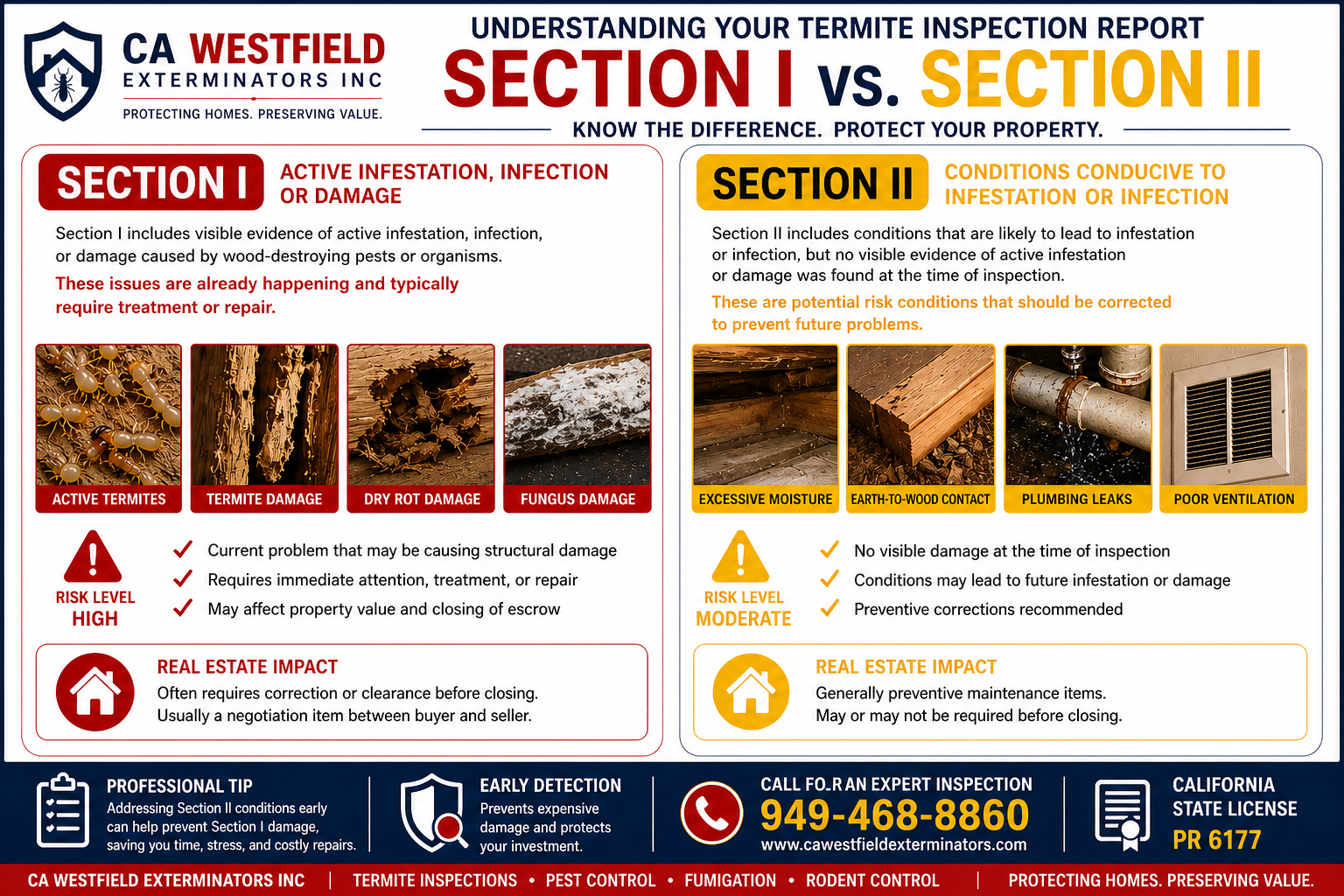
A termite inspection report in California is more than just a list of findings.
👉 It is a technical classification system that determines:
- The current condition of the structure
- The level of risk
- The required action (treatment, repair, or prevention)
- Responsibility during a real estate transaction
🔴 Section I – Active Infestation, Infection, or Damage
📌 Technical Definition
Section I includes:
👉 Visible evidence of active infestation, infection, or damage caused by wood-destroying pests or organisms
This classification is based on observable and verifiable physical evidence.
🔬 What Qualifies as Section I
Section I findings may include:
- Active termite infestation (live termites or fresh evidence)
- Structural damage caused by termites
- Fungus or dry rot damage resulting from prolonged moisture exposure
- Wood deterioration associated with wood-destroying organisms
- Evidence of previous infestation that has resulted in damage
🧠 Structural Interpretation
👉 Section I represents a confirmed structural condition
- The integrity of the material has been altered
- Damage has already occurred or is actively occurring
- The condition is no longer theoretical—it is measurable
⚠️ Risk Assessment
👉 High Risk – Immediate Attention Required
- Structural weakening may be present
- Infestation may be active or progressing
- Further deterioration is likely without intervention
🏡 Real Estate Impact
In most transactions:
- Section I items typically require correction, treatment, or repair
- May be required by lenders or escrow conditions
- Often becomes a negotiation point between buyer and seller
- May affect property value and closing timeline
🧪 Professional Approach
👉 Section I items require:
- Verification of activity level
- Determination of extent of damage
- Appropriate treatment recommendation
- Structural repair evaluation if necessary
🟡 Section II – Conditions Conducive to Infestation or Infection
📌 Technical Definition
Section II includes:
👉 Conditions deemed likely to lead to infestation or infection, but where no visible evidence of active infestation or damage was found at the time of inspection
🔬 What Qualifies as Section II
Section II findings typically include:
- Excessive moisture conditions
- Plumbing leaks or water intrusion
- Earth-to-wood contact
- Inadequate ventilation
- Poor drainage or grading
- Structural conditions that trap humidity
🧠 Structural Interpretation
👉 Section II represents a risk environment
- The structure is not currently damaged
- However, conditions are favorable for biological activity
- It reflects potential—not confirmed damage
⚠️ Risk Assessment
👉 Moderate Risk – Preventive Stage
- No visible damage yet
- High probability of future infestation if not corrected
- Often precedes Section I findings
🏡 Real Estate Impact
In transactions:
- Section II items are typically considered maintenance or preventive issues
- Not always required for clearance
- Often subject to negotiation
- May or may not be corrected before closing
👉 However:
👉 Ignoring Section II conditions often leads to future Section I damage
🧪 Professional Approach
👉 Section II requires:
- Identification of root cause (moisture, ventilation, structural design)
- Preventive correction
- Monitoring if necessary
⚖️ Critical Comparison (Expert-Level Understanding)
| Category | Section I | Section II |
|---|---|---|
| Classification | Confirmed issue | Conducive condition |
| Evidence | Visible damage/activity | No visible damage |
| Structural Impact | Present | Potential |
| Risk Level | High | Moderate |
| Timeline | Immediate | Preventive |
| Action | Treatment / repair | Correction / prevention |
🔗 Relationship Between Section I and Section II
👉 In most real-world cases:
Section II condition (moisture, ventilation, etc.)
↓
Biological activity begins
↓
Section I damage develops
👉 👉 Section I is the result
👉 👉 Section II is often the root cause
🔬 Role of Advanced Inspection Technology
Using tools such as FLIR Systems, inspectors can:
- Detect hidden moisture conditions (Section II)
- Identify early-stage anomalies before visible damage
- Improve classification accuracy
- Reduce misdiagnosis
👉 This allows:
- Earlier intervention
- More accurate reporting
- Better treatment planning
🚨 Common Misinterpretations
❌ “Section II is not important”
❌ “Section I always requires fumigation”
❌ “Visible damage represents full extent of problem”
👉 Correct understanding:
- Section I confirms current structural impact
- Section II identifies conditions that lead to that impact
📞 Professional Guidance
👉 Need help understanding your termite report?

📞 Call 949-468-8860 for a professional evaluation and clear explanation.💡 Final Expert Summary
👉 Section I = Verified damage or infestation
👉 Section II = Conditions that can lead to damage
👉 Both must be evaluated together to understand the true condition of the property
🔥 One-Line Professional Statement
👉 “Section I reflects the consequence — Section II reveals the cause.”