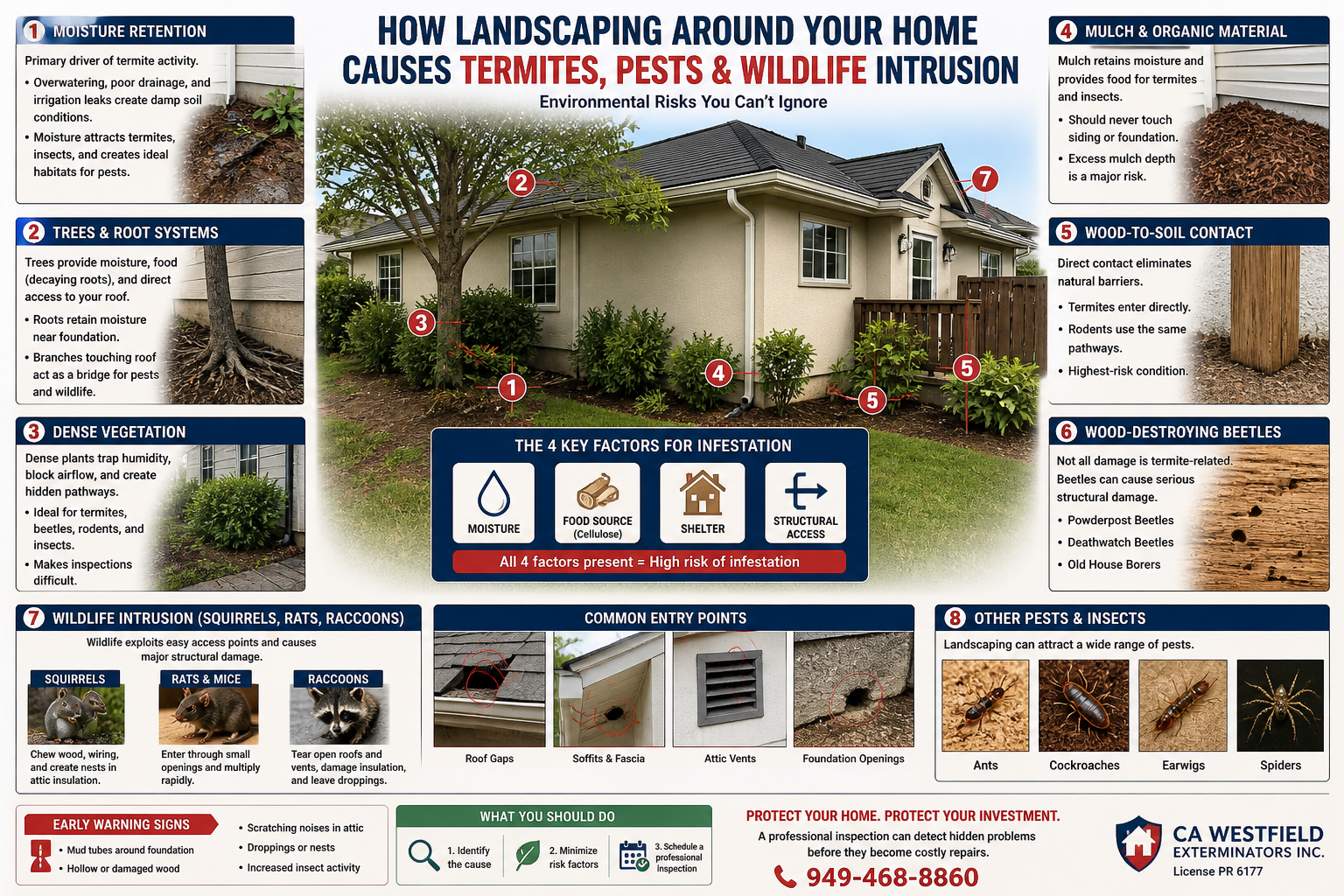
🌳 How Landscaping Around Your Home Triggers Termites, Structural Pests & Wildlife Intrusion

Advanced Environmental & Structural Risk Analysis for California Homes (2026) πŸ“ž Schedule a Certified Termite, Pest & Wildlife Inspection πŸ“ž Call Now: 949-468-8860 CA Westfield Exterminators Inc β€’ Structural Pest…

Advanced Environmental & Structural Risk Analysis for California Homes (2026)


πŸ“ž Schedule a Certified Termite, Pest & Wildlife Inspection

πŸ“ž Call Now: 949-468-8860

CA Westfield Exterminators Inc β€’ Structural Pest Control License PR 6177
WDO β€’ HOA β€’ Escrow (Section 1) β€’ Wildlife Entry Inspection


🏑 Executive Overview (Field-Level Perspective)

Landscaping significantly alters the microclimate and ecological balance surrounding a structure.

When trees, plants, mulch, and organic materials are installed without proper spacing and moisture control, they create ideal conditions for:

  • Termites (subterranean & drywood)
  • Wood-destroying beetles (WDO category)
  • Ants and insects
  • Rodents (rats, mice)
  • Wildlife (squirrels, raccoons)

Core Principle:
Infestation occurs when Moisture + Cellulose + Shelter + Structural Access coexist.


πŸ”¬ Integrated Infestation Model

Moisture + Organic Material + Shelter + Structural Access = Active Infestation

πŸ‘‰ This model applies to both insects and vertebrate pests


πŸ’§ 1. Moisture Retention (Primary Driver of Termite Activity)

https://images.openai.com/static-rsc-4/GebWt_XQ4_gnBqPKQr8Ta8XJKwi9xi7V5AduezfCdqpBA9sMcSbNzOCxsrYRq2TdoxOOFq9WEIUxcsRfxPgl-3L9BQoAhvfkStmt-4xO39VSCGgWWAi-j0x1rOhv_D19kDW21yQoM8s24Krm_Fe4jqdMNALQcWIDCKWdFFvbUnbZM24Bbf3ntxUZhx8NlnlA?purpose=fullsize
https://images.openai.com/static-rsc-4/eatoSNd5yb3fzGao-9Pct0W9CG75PVJ6j4QVOAEBJoDKy8O1x77KDuMeok0D11SnN_vUfW0lNpcWF9a8VfP3jIJQHLyshtXQQovJroq8TgMkF-Y4eG153uo0HJ5kLF9-rrmHT1CzbdCyuwbLJxXjOsUZBmnjpJ35sf5Q4gvrDsPiT3WIcSEonqg2Z3TGW5mV?purpose=fullsize
https://images.openai.com/static-rsc-4/VaiFdLgziFiPRHADqkqv1gVVGKgmCVkmtd8uIXR0o10npNt2GSYXvfvODXHCPqPFuGAzjWq2gWfUUlmV1dQYEUb3QtzxA1URsa3Xq0IBl8qiLBlH1v5MPhx_oKkb_lX-TcfDf8ORIcqhhr6SLGBKtfE4YfJLXcUIyUf1-RsPfTy97JB4JUjKiQB5K5HO_iAk?purpose=fullsize

πŸ”¬ Technical Mechanism

Landscaping increases soil moisture through:

  • Irrigation overspray
  • Poor drainage grading
  • Organic mulch retention
  • Reduced evaporation due to plant density

πŸ‘‰ Result:

  • Elevated humidity zones
  • Softened wood fibers
  • Ideal habitat for subterranean termites

⚠️ Structural Impact

  • Moisture migrates into sill plates and framing
  • Termite colonies establish near foundation
  • Hidden structural degradation begins

🌳 2. Trees & Structural Bridging (Above & Below Ground)

https://images.openai.com/static-rsc-4/2E-x09tetpGu_-Yvr_yUIkJChHbfyWqWQ0UUyYdUzhW7ryH3IsTK7Twb4Hxy5px2d-N7A0xxp294SrKGY9HbYKH3ziVhWQk6g4DCYAJWGgJlOI2wQgPah8gp0ifo9nJwFqhECTe_32GbOqVlwFpKOwu70aLpn-_38iHhvzL1EUuagG90kDKKdFXZHTfrk0SY?purpose=fullsize
https://images.openai.com/static-rsc-4/cf9QFatZ7aediIsnHA50qn_NciS_f1p1i9VS_d6YYJUHVQl0o0bmoF6yjqGQLHy3dIR972z2YCBtoWnGzgStJwLYm9n3BU2d8zYtL6tv89QxothwLFA7OSuUOPucX1bizo52ujf72UP8CGRL5UI6HcvQ-BnpPGkIsdrcub3GOuhZxizzKynZypX2iVvvHqlP?purpose=fullsize
https://images.openai.com/static-rsc-4/VzE3nUScIiy4tQurrMJqjBlxgyh6iu72oiTAwaVHYDC5a2I_Jkv1uxJdta36LsibpXRiP7RyOKcqA9OwaskbTOjP4lIFuPtVxEt1yQwqHJPZ6VTVQdc99Dodz60RTsgqeg4wVqZkHmV1vWkhwpFZ3PePFBQ9PddgSx0EM6C9OXCPIsEqOEbKjse2PN0b-HJG?purpose=fullsize

πŸ”¬ Mechanism

Trees create both:

βœ” Subsurface Risk

  • Moisture-retaining root zones
  • Decaying root cellulose

βœ” Above-Ground Risk

  • Direct structural access via branches

⚠️ Critical Condition

πŸ‘‰ Branches contacting:

  • Roofline
  • Fascia
  • Gutters

πŸ‘‰ Enables:

  • Squirrel attic entry
  • Raccoon roof access
  • Rodent movement into vents

🌿 3. Dense Vegetation & Microclimate Stabilization

https://images.openai.com/static-rsc-4/P0AF1ZGSDutMzmqmP2DxYAqF3fJ_r4hcpNNtPOQWpsaVVh0wIwu5_h-jdCeDW08lzPKFocyahZd65CrEuYLa_QyWMGqjQOOc2VuYr6GSgE4qA1sl22jnKF2X4HLXQ7rxHp9HJHDTN2JIwFOQ8s-kHygycaoI8m4YKuW6Z6vvzCqp2AeZ1ILLlWEdWWrSTyxy?purpose=fullsize
https://images.openai.com/static-rsc-4/tUlqXhRMZPq-Twtd-LInZepkhDobv_mZJHPYT8jereF2F8yEkvtshILl9Fd6OdJuUBTEfQf0MfXTZEx6fusgHi-tZZC-6TK2ktXNzX2ZrtkKfOham-DRjHKS2N5IXLGQkiy5jV6K5Jqdg1JrNlabU5dXfpdwkCJzClsIuJpQk1KhpkefcTZomCBkmU4-rQAk?purpose=fullsize
https://images.openai.com/static-rsc-4/67AAGXNp_pnq9J8lcQGzNcyBDOzNvjQjFtvkj-QoQiQqWspkaOtzN9_dQzx63ElPfOHCyODmpS7rDmjAEEh84tpofU_b7TOEw8dtBigE72IoZczBI4RTALr080jLvOVfJ7btZIDvhqJdsRF-mBfx2icOZM2qApmI5vZmxuAT6Hynrgsh8KLsXQjfpGXkYWP-?purpose=fullsize

πŸ”¬ Environmental Effect

Dense vegetation creates:

  • Low airflow zones
  • Reduced UV exposure
  • Stable humidity

πŸ‘‰ Ideal for:

  • Termites
  • Wood-boring beetles
  • Ant colonies
  • Rodents

🌱 4. Mulch & Organic Layers (Dual-Risk System)

https://images.openai.com/static-rsc-4/EOVipJX1l38GDDRglSNZ5gzYhuUNwi5JRqa6g_jnutdhDIzfZhzWMG3Ok76VbJ4yHcnZ0VzDOXz7XddfZGpqSvPpkFQ-H_gNHhmd7xFrxrz5J--soXndB3duq20BmlrxEJOMLVKWfVkF3Wep6N_kgfFkCJfE7efjmfUIAMXGhqL4CxM_5sPuE-4TLalGn9Y-?purpose=fullsize
https://images.openai.com/static-rsc-4/gf8g1TIf7Wj9wGHnooPOZw7LU_dbWpvKv5wzJ5iXqfOJQet0FH_PGMG02ztiNNVAOwUIex9uTGHSM73OOWi7oS7--FLFOCPkEGL-ZYmaNpwi3WxXvmkRcWu80LHe1vWWRkHtis4d-f1OvWusWkKfIhtbgVGjRaV0FlTEySaB-aFsggE-Ek9MDBdvXRSpR8qf?purpose=fullsize
https://images.openai.com/static-rsc-4/87SacKPdu2Nl81I_FMji8LeTVfx_XgqEk2xwCp5uQs3xDzo1whX0scp-Q7H2arpan2umZcRLwFxaFnnpH-TXKk0sbJcXJSXd0eselw3-pWJaBhqPDXlnz1dsfUOwL1f1A9Y_3B6IEvSwTMcNLq2wTP5bCLgyzR56N5sZ3_3P2FIE_7vMpH1imJF_4W2b6K4z?purpose=fullsize

πŸ”¬ Mechanism

Mulch functions as:

  1. Moisture retention barrier
  2. Organic habitat layer

πŸ‘‰ Facilitates concealed pest movement and nesting


⚠️ High-Risk Condition

  • Mulch in direct contact with siding
  • Excessive mulch depth

πŸͺ΅ 5. Wood-to-Soil Contact (Direct Structural Entry)

https://images.openai.com/static-rsc-4/9squGMb4_yztFfv1r9_TEs059QuwBs_uGE66s66FmyZXyuUimFuPc66QTa_RLBcTmm4eGNrWOw02osKOorOY3p844VxvgO37nenKnI6bPc0ZhHj8g-AAImUbclHdjkps2Csfr7-MZZnY0AItX3eC0aIWDOGOHRxhhF-L6HtXtWDmMwtNAms_BRIcTMlQ_sTj?purpose=fullsize
https://images.openai.com/static-rsc-4/GkoPDYYVXL1BB51bkVvkn9DxIhWMsl8yjd7AHIgd0BbbLVfhAwDt4fBMmrUm1hlANptc6xbc9Wq5lcHM_PkXIiWHBYrVu3cPatkDj06RtF3Zf8G0tYPfzYgK8s4C5fCUiYhXdo6cxZFVftuRSxARRmx9WsxSk370bpP8NCba4QPWdogPQwllUQt5P_neNZvE?purpose=fullsize
https://images.openai.com/static-rsc-4/HZ2pWd3xjguEIXJ2pra-kKofNXm6XlkAKzO0DICztqPGpNxNa5hJc0qqiYQMn5_ZbMmuXv4oae9H2LiYUn2AauNIi6AGCiNEObDjx4NuFxesPFHJg_MWKAEThCEg3c54-y9Ul5HL0dUNbtCg27g9AFfhVsrokzXbM3oM-vv6dGCZEScRNMGW0T6WhbXNNC28?purpose=fullsize

πŸ”¬ Mechanism

This condition removes all protective barriers:

  • Direct termite access
  • Continuous moisture absorption
  • Shared pathway for rodents

πŸ‘‰ Highest-risk condition in structural pest control


πŸͺ² 6. Wood-Destructive Beetles (Often Misidentified)

https://images.openai.com/static-rsc-4/y9cNxbO27YiPsXVAbQGUPOlFHgkr9IJBO3pL91hehMWBVImfAC3imbiKall7jA-UrFOnI11S092wa1gZX5DJ5HS9jhbja-ul95Zpn-T0zVJxVjtjP8qatG7QkUpOYYm9zVtfjMTN2lTQc8jDOUk8gCcgB3n8ZtrT3jPRuiF4JYRU6Xum3FLvp3n45t8Yvn-E?purpose=fullsize
https://images.openai.com/static-rsc-4/fQrVuKyyPOMHLRX22PxQIwb0XeZcCYOCxRkRjMgUptneiJmw0jzwtccQ5aYrSiFuHcUWxWhonu78zNboMnWk2Pg6RCKfIctB2hCEBWIMuNoHL4YxlXQsWuC35kNL2EzgysxzwwvngYWzRNceiGXH8bQ4Vo5qXCSb8oW2D0S7W-b1SDGNT0N53ezud0xeP5pF?purpose=fullsize

πŸ”¬ Key Insight

Not all structural damage is termite-related.

βœ” Common Beetle Types

  • Powderpost beetles (hardwood damage)
  • Deathwatch beetles (moist wood)
  • Old house borers (structural framing)

πŸ‘‰ Damage is caused by larvae feeding inside wood


🐿️ 7. Wildlife Intrusion (Squirrels, Rats, Raccoons)

https://images.openai.com/static-rsc-4/JNS_EezlMbYy1W9p--UHU-_MxElawS889hIi7QOuwySL3qpZ86uI4FkTNyA59PGMvvQIGA8zJhciQea-tj3_GLVJpZbAUDNVO549sMSX4xDmuiAMPeFV1nFUGoiAUVajilNJ23IihhSrQJYFmmhMpCsfu0Te-9HD6Ls5jaZZx4_DVNhVLj4VJjhaXlch__f4?purpose=fullsize
https://images.openai.com/static-rsc-4/kZGIWaVTKH1kneOeF2BPURMflC72Bs3nK2D6ToVnYM-CMIggM1FE2N4ng6ufKOM48Nn09PJSYCwgTae0JmaLnuLwOYBoV8tTqbFNbuUrgF67kRSB2qCQTvRW8cviw975qvE_R0z8PwingS4NVfYOdBaKbkiQ2yLGkG83jecqoHT8PpzKb9sB4rEJYNyuw_ro?purpose=fullsize
https://images.openai.com/static-rsc-4/MukWIGpO0pvv3EothUiIuLUqqELvQ66orfoHBQ5HovT1D9mmjSrFSRmX-1TWOEpo--sS7IGta9tP9RiMtPBV528EY7xXlJckmNNY9StHFlCjjtnndgpvcB0VF9-mCJiZmmwSBLLxVrPk1X1Bn-83hcddK5GpAcYRbViomDZzubtMrBRIJGYrwDQkPeHA4Pmw?purpose=fullsize

πŸ”¬ Entry Mechanism

Wildlife exploits:

  • Roof gaps
  • Attic vents
  • Soffits
  • Foundation openings

βœ” Common Issues

🐿️ Squirrels

  • Chew wood and wiring
  • Nest in attic insulation

πŸ€ Rats & Mice

  • Enter through small openings
  • Rapid reproduction

🦝 Raccoons

  • Tear open roof structures
  • Cause severe attic damage

⚠️ Structural Impact

  • Insulation destruction
  • Fire hazards (chewed wires)
  • Structural weakening

πŸ“ž Stop Termite, Pest & Wildlife Damage Before It Escalates

πŸ“ž Call Now: 949-468-8860

🚨 Early Warning Indicators

  • Mud tubes near foundation
  • Hollow or weakened wood
  • Scratching sounds in attic
  • Droppings or nesting materials
  • Increased insect activity near landscaping

πŸ”¬ Professional Inspection Protocol

A certified inspection includes:

  • Full structural assessment
  • Attic & crawlspace evaluation
  • Moisture mapping
  • Thermal imaging (FLIR technology)

πŸ‘‰ Detects hidden infestations without invasive damage


πŸ“ž Book a Certified Inspection Today

πŸ“ž Call Now: 949-468-8860

πŸ’‘ Final Expert Conclusion

Landscaping is not the issueβ€”
πŸ‘‰ uncontrolled environmental conditions are.


πŸ”₯ Critical Takeaway

The closer moisture, vegetation, and organic material are to your home,
the higher the probability of termite, pest, and wildlife infestation.